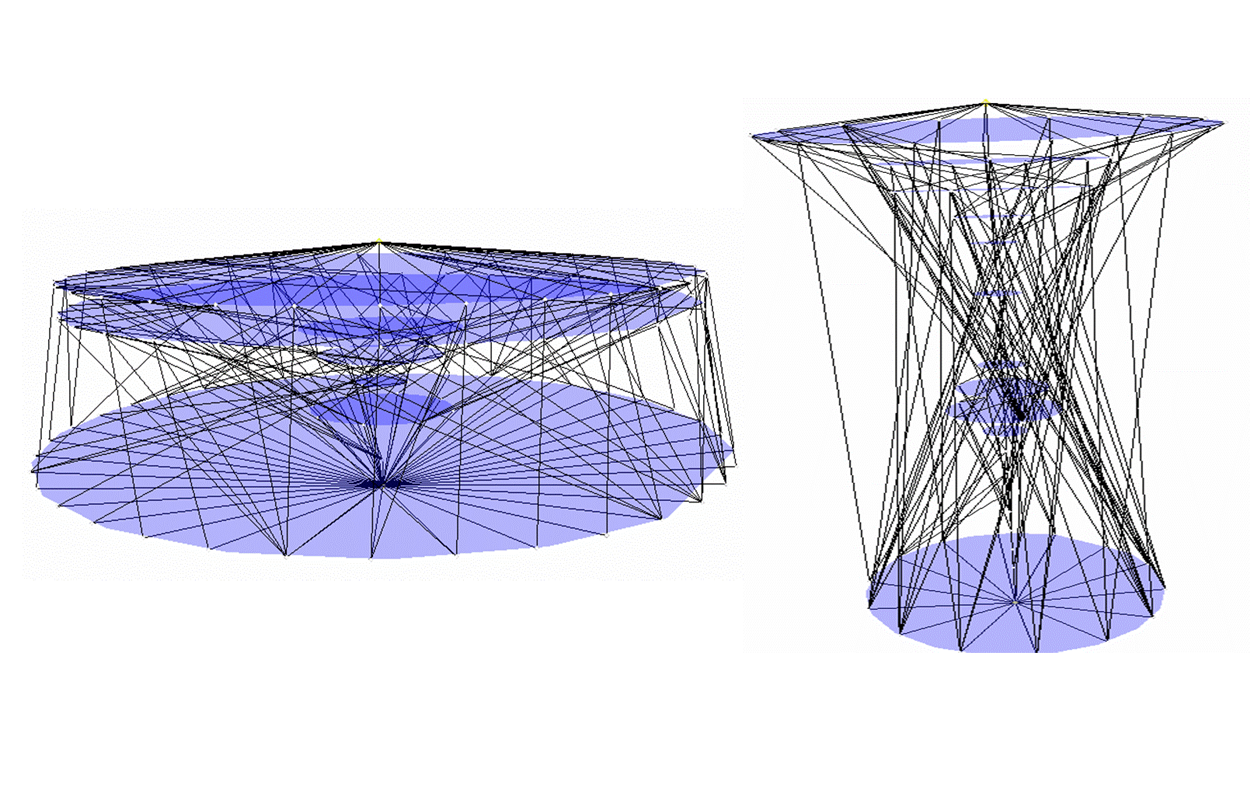
Interactive multiscale visualization of huge graphs: application to a network of weblogs

Massoud Seifi, Jean-loup Guillaume, Matthieu Latapy and Bénédicte Le Grand

Proceedings of the 8th Workshop on Visualization and Knowledge Extraction (EGC 2010)

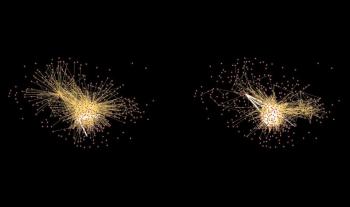
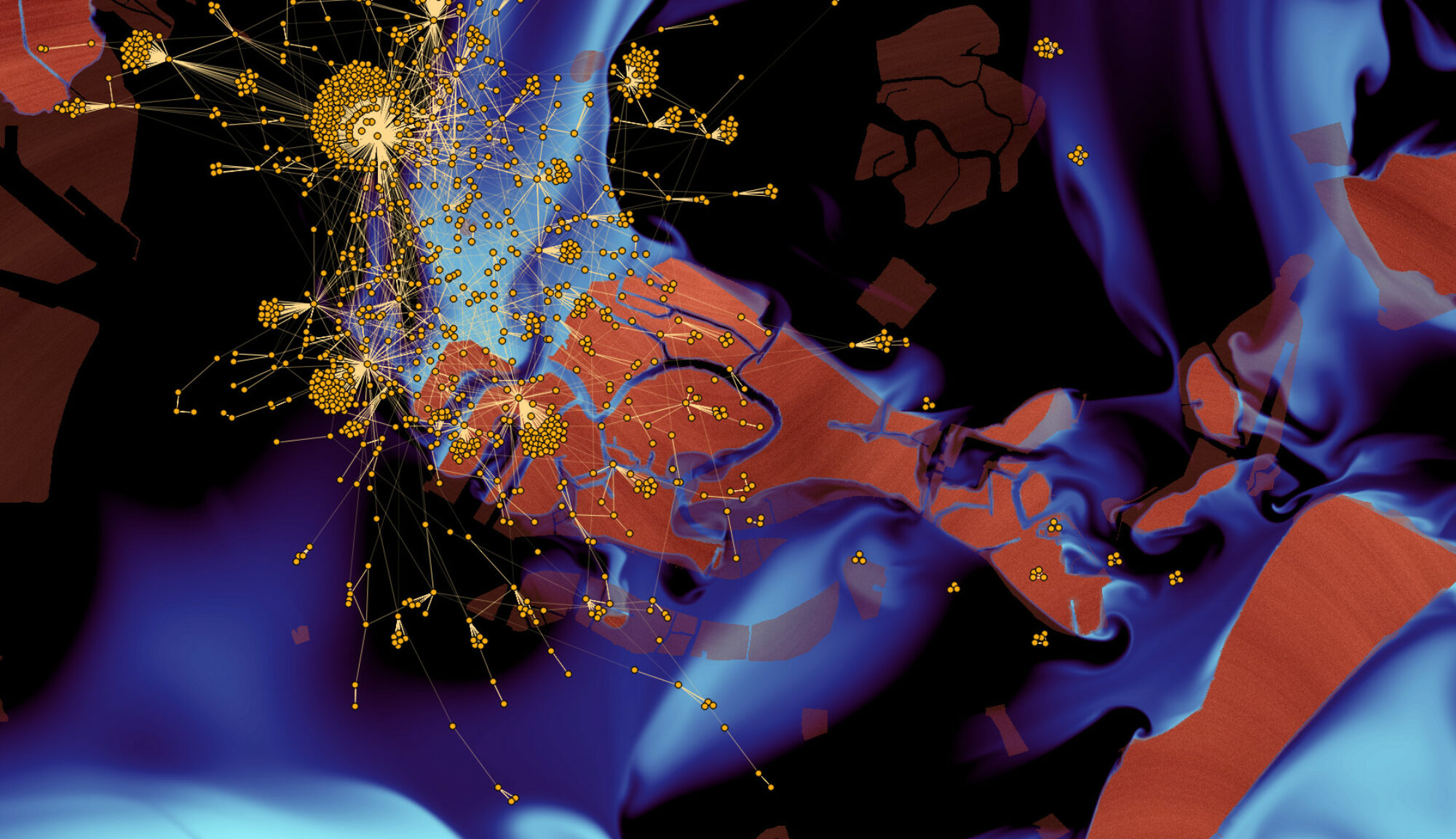
De nombreux réseaux du monde réel peuvent être modélisés par des grands graphes. Réduire la complexité d’un graphe de manière à ce qu’il puisse être facilement interprété par l’oeil humain est une aide précieuse pour comprendre et analyser ce type de données. Nous proposons une méthodologie de visualisation interactive multi-échelle de grands graphes basée sur une classification des sommets qui nous permet de représenter ces graphes de manière lisible et interprétable. Nous appliquons notre méthodologie à un réseau de blogs francophones.

Download

Link prediction in a file-provider network

Link prediction in a file-provider network

Complex network measurement with link queries

Complex network measurement with link queries

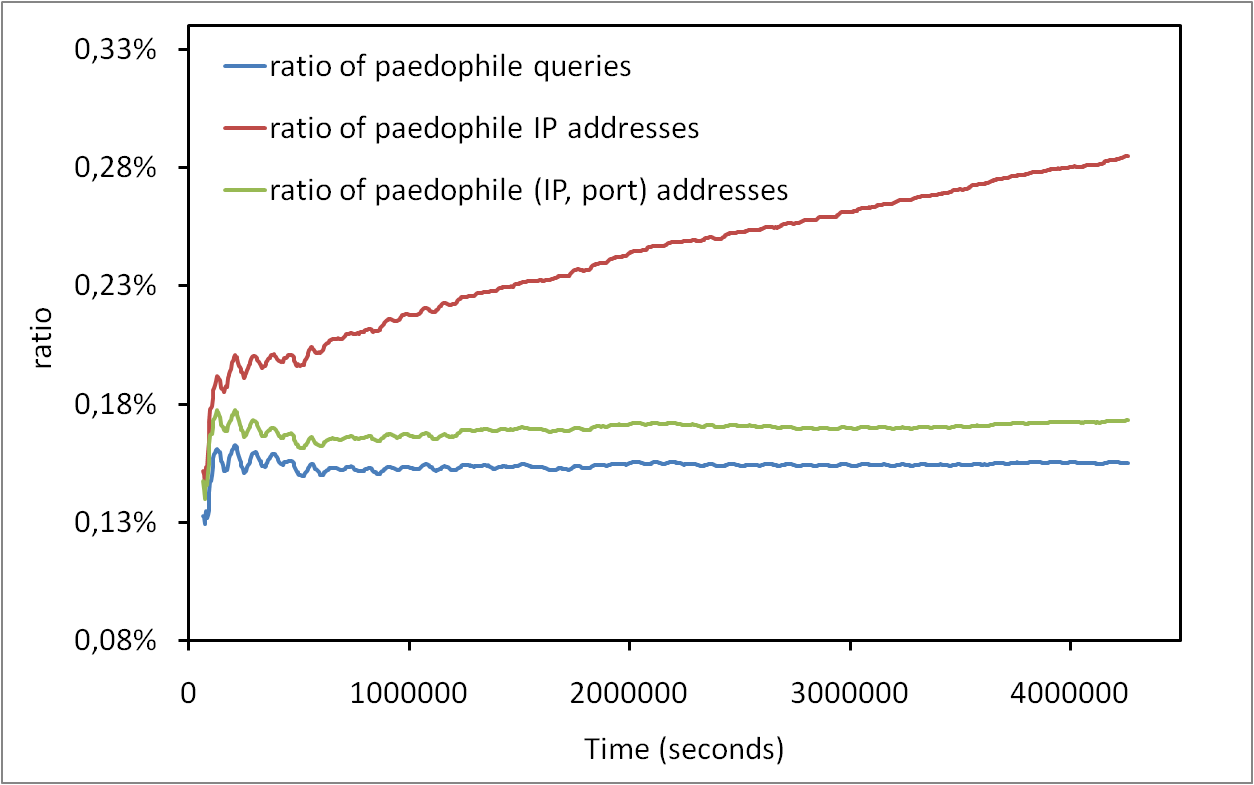
Quantifying paedophile users on a P2P system

Quantifying paedophile users on a P2P system

Keywords popularity in eDonkey queries

Keywords pupularity in eDonkey queries

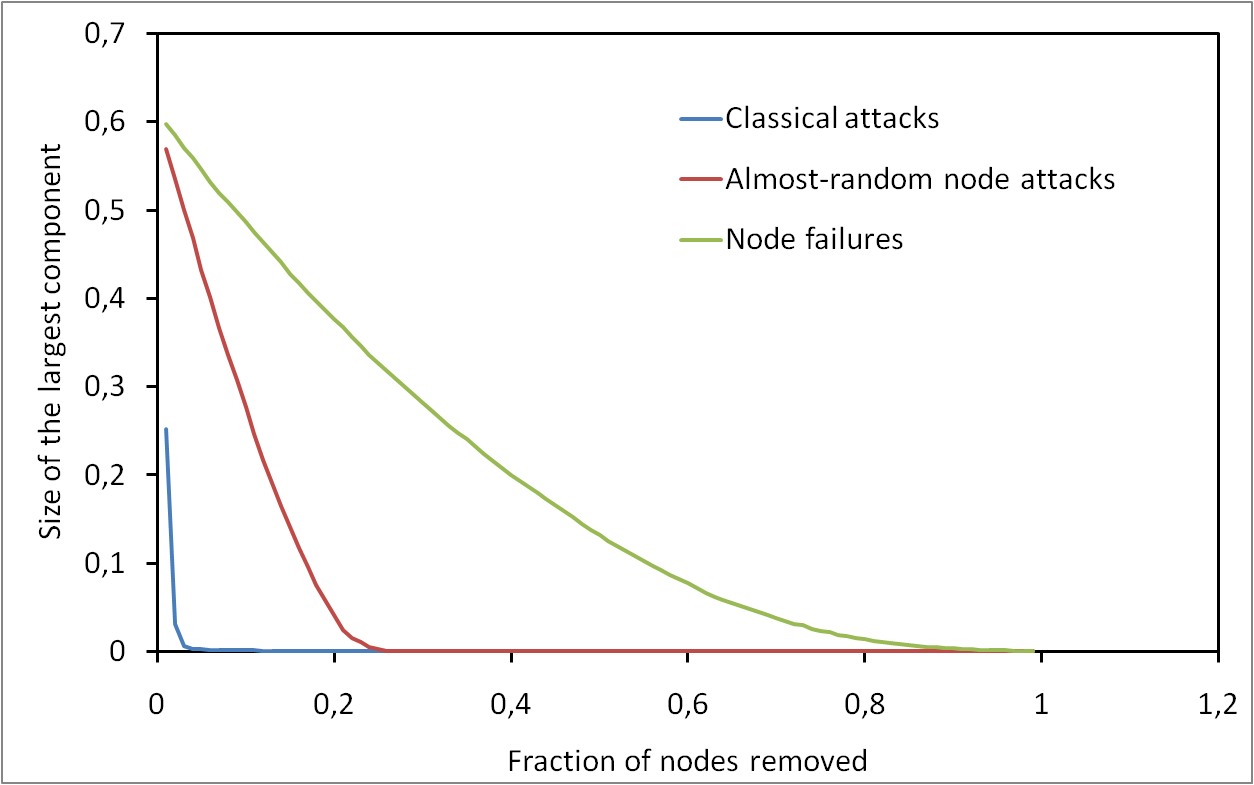
Attacks on heterogeneous networks

Attacks on heterogeneous networks

Evaluation of the real degree of IP routers

Evaluation of the real degree of IP routers

Following and Followers in Twitter

Following and Followers in Twitter

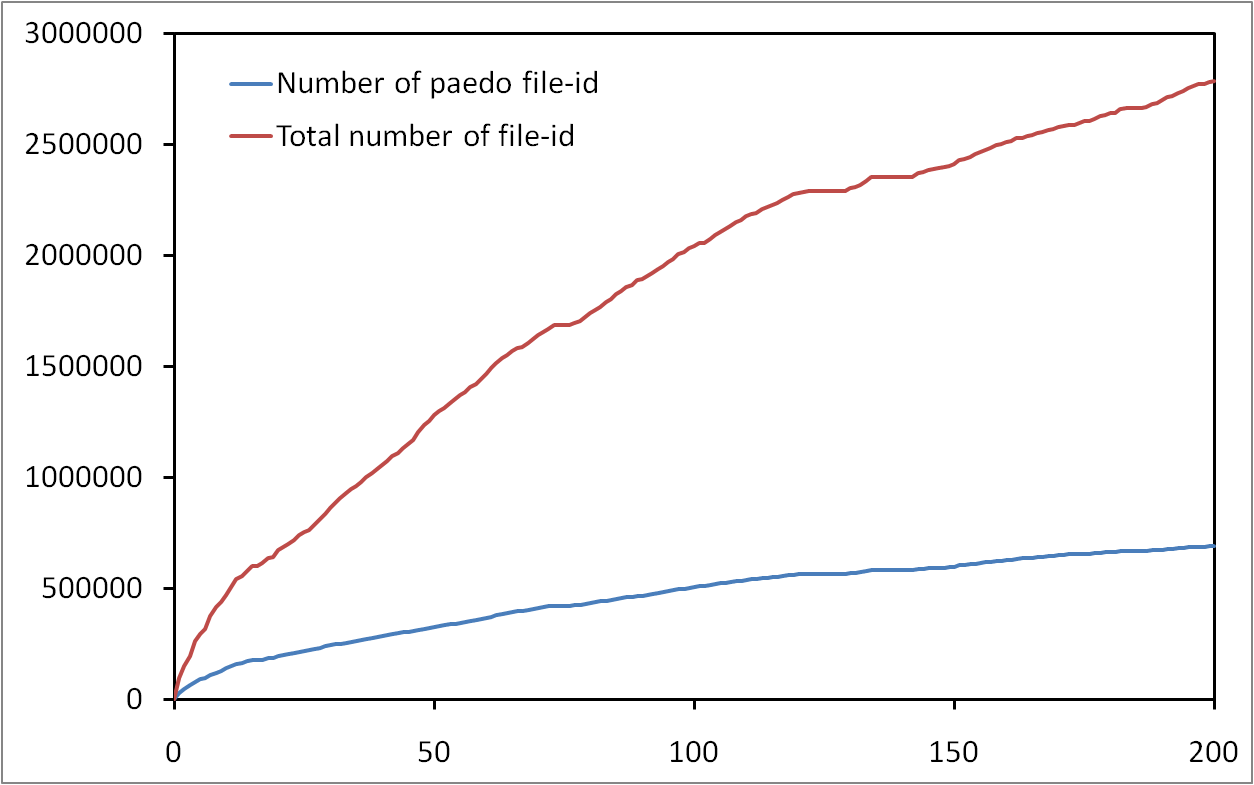
Number of file-id discovered in a client-side eDonkey measurement

Number of file-id discovered in a client-side eDonkey measurement

Social networks conceptual analysis

Social networks conceptual analysis

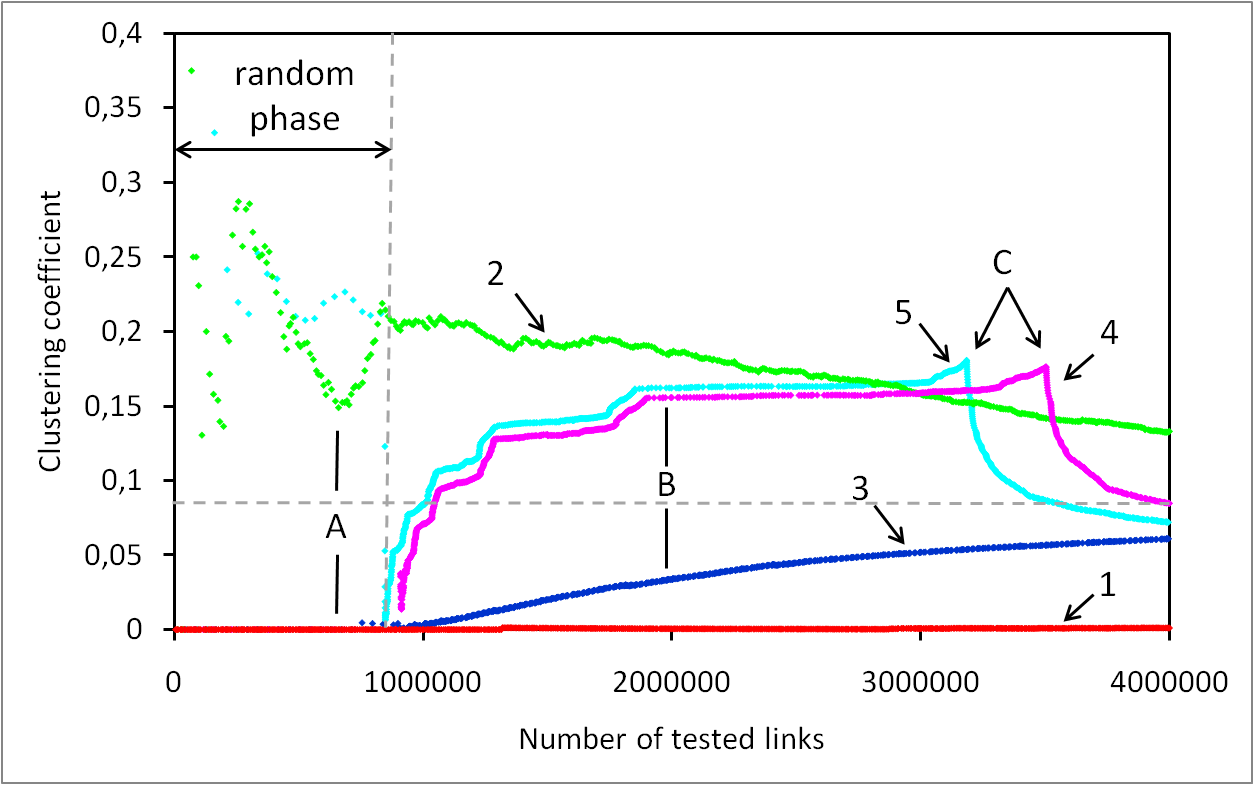
Measuring clustering coefficient with different strategies

Measuring clustering coefficient with different strategies

Evolution of degree distribution during measurement

Evolution of degree distribution during measurement

Network Robustness

Network Robustness

Impact of Random Failures and Attacks on Poisson and Power-Law Random Networks

Clémence Magnien, Matthieu Latapy and Jean-Loup Guillaume

ACM Computing Surveys, 43 (3), 2011. Extended abstract published in LNCS, proceedings of the 8-th International Conference On Principles Of Distributed Systems OPODIS’04, 2004, Grenoble, France (title: Comparison of Failures and Attacks on Random and Scale-free Networks)

It appeared recently that the underlying degree distribution of a network may play a crucial role concerning its robustness. Empiric and analytic results have been obtained, based on asymptotic and mean-field approximations. Previous work insisted on the fact that power-law degree distributions induce a high resilience to random failure but a high sensitivity to some attack strategies, while Poisson degree distributions are quite sensitive in both cases. Then, much work has been done to extend these results. We focus here on these basic results, with the aim of deepening significantly our understanding of their origin and their limitations. We review in detail previous contributions and we give full proofs in a unified framework, in which the approximations on which these results rely are well identified. We then add to these known results a set of new ones aimed at enlightening some important aspects. We also provide extensive and rigorous experiments which make it possible to evaluate the relevance of the analytic results. We reach the conclusion that, even if it is clear that the basic results of the field are true and important, they are in practice much less striking than generally thought. The differences between random failures and attacks are not so huge and can be explained with simple facts. Likewise, the differences in the behaviors induced by power-law and Poisson distributions are not as striking as often claimed.

Download

Mobile IPv6 Deployments: Graph-based Analysis and practical Guidelines

Guillaume Valadon, Clémence Magnien and Ryuji Wakikawa

Computer Communications, 32, 2009

The Mobile IPv6 protocol is a major solution to supply mobility services on the Internet. Many networking vendors have already implemented it in their operating systems and equipments. Moreover, it was recently selected to provide permanent IP addresses to end users of WiMAX and 3GPP2. Mobile IPv6 relies on a specific router called the home agent that hides location changes of the mobile nodes from the rest of the Internet. To do so, the mobile nodes’ traffic must flow through the home agent. This mandatory deviation produces longer paths and higher communication delays. In order to solve these problems, we describe a new approach to address deployments of Mobile IPv6 based on graph theory and could be applied to any operator’s network. In particular, we use notions of centrality in graphs to quantify increases of communication distances induced by dogleg routing and identify relevant home agents locations. We evaluate this approach using real-world network topologies and show that the obtained Mobile IPv6 performance could be close to direct paths ones. The proposed algorithm is generic and can be used to achieve efficient deployments of Mobile IPv6 as well as Home Agent Migration: a new Mobile IPv6 architecture using several distributed home agents.

Download

Spreading of a file in a P2P system

Spreading of a file in a P2P system

Impact of submission time on paper acceptation

Impact of submission time on paper acceptation

Bias in generated random graphs

Bias in generated random graphs

Interval between the discoveries of IP addresses from several monitors

Interval between the discoveries of IP addresses from several monitors

Typical days of search management for an eDonkey server

Typical days of search management for an eDonkey server