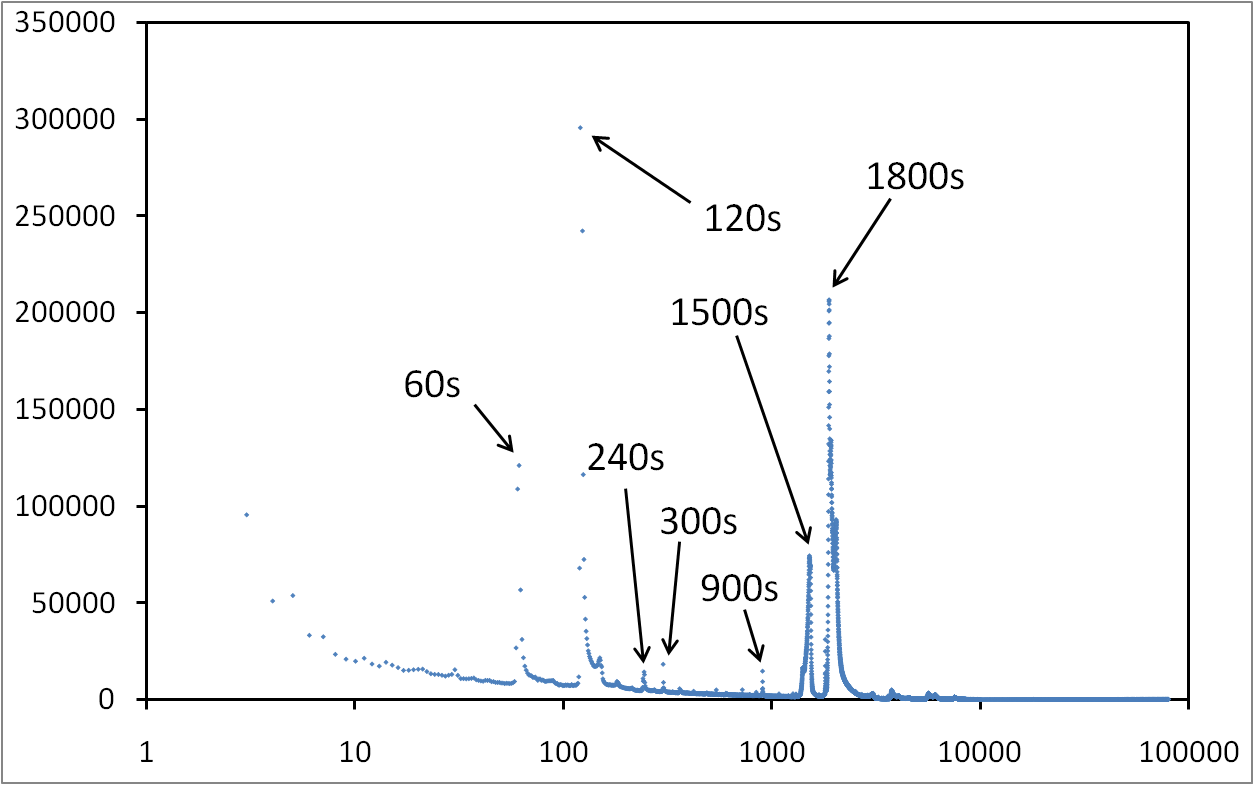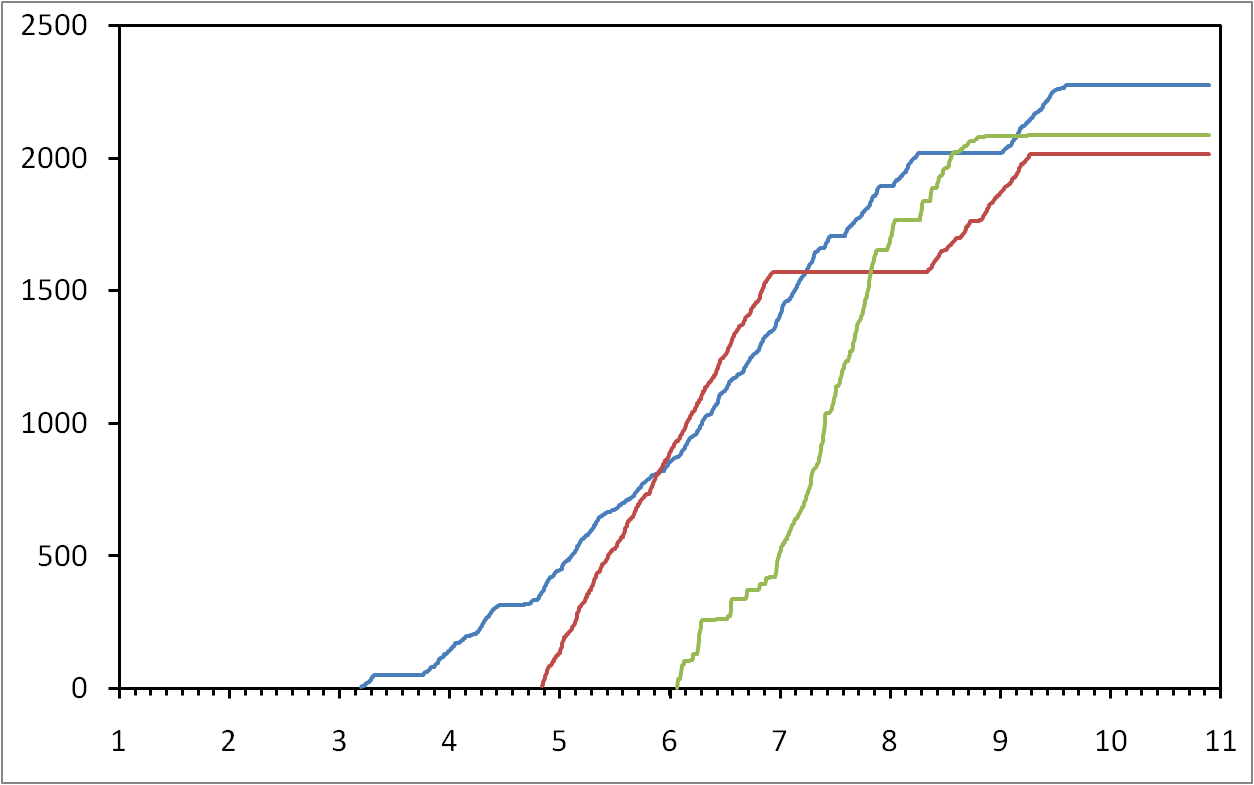
Dynamics of Internet links around a source
Post-Processing Hierarchical Community Structures
Multi-scale visualization of a collaboration dataset
Empreintes conceptuelles et spatiales pour la caractérisation des réseaux sociaux
Bénédicte Le Grand, Marie-Aude Aufaure et Michel Soto
Conférence EGC 2009 (Extraction et Gestion des Connaissances), Strasbourg, France, 27-30 janvier 2009
In this paper, Formal Concept Analysis and Galois lattices are used for the analysis of complex datasets, online social networks in particular. Lattice-inspired statistics computed on the objects of the lattice provide their « conceptual distribution ». An experimentation conducted on four social networks’ samples shows how these statistics may be used to characterize these networks and filter them automatically.
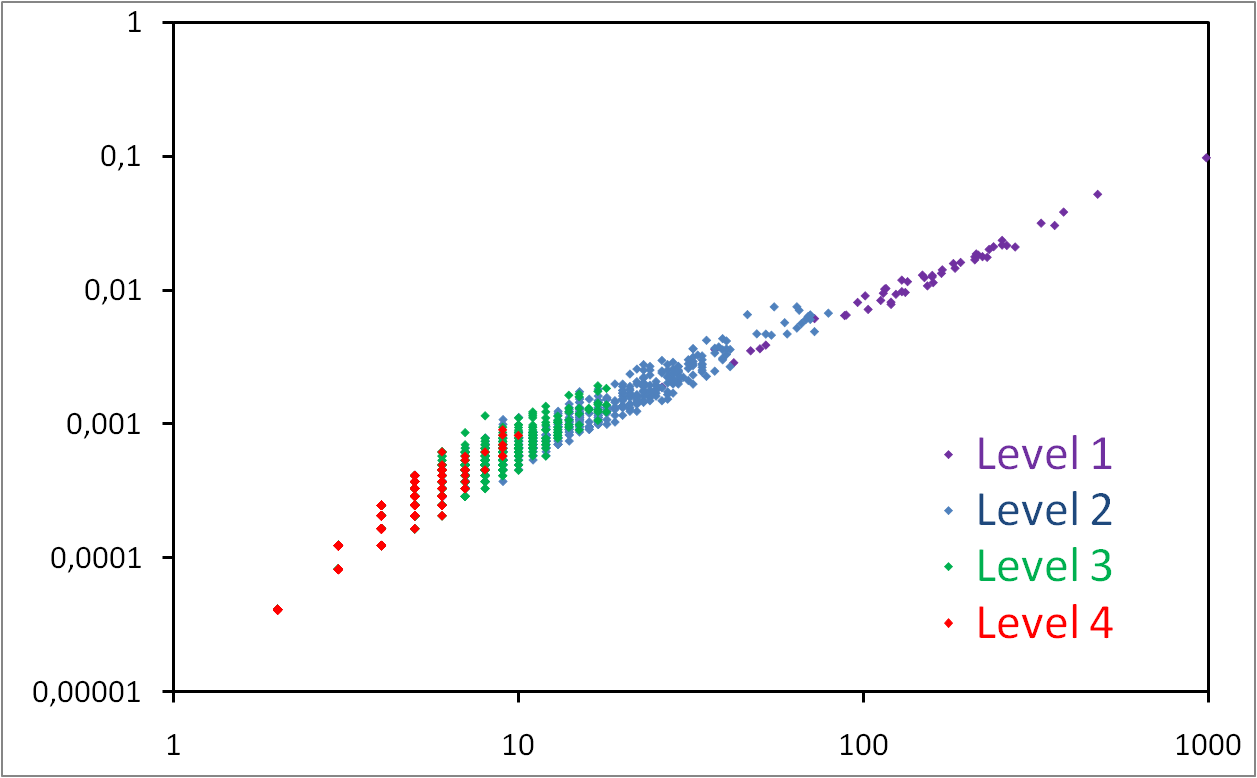
Maximizing the modularity: what is left behind
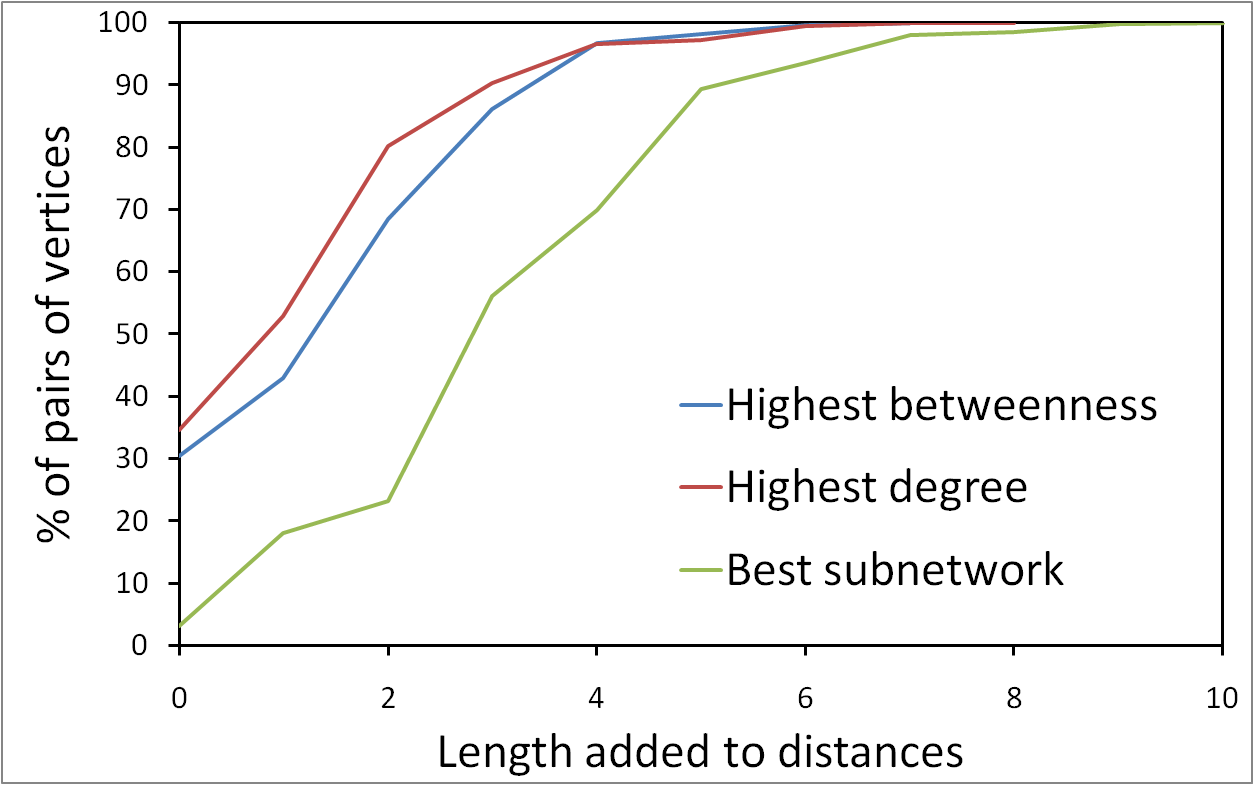
Selecting home agents locations using the degree and the betweenness centrality
Relevance of observed properties
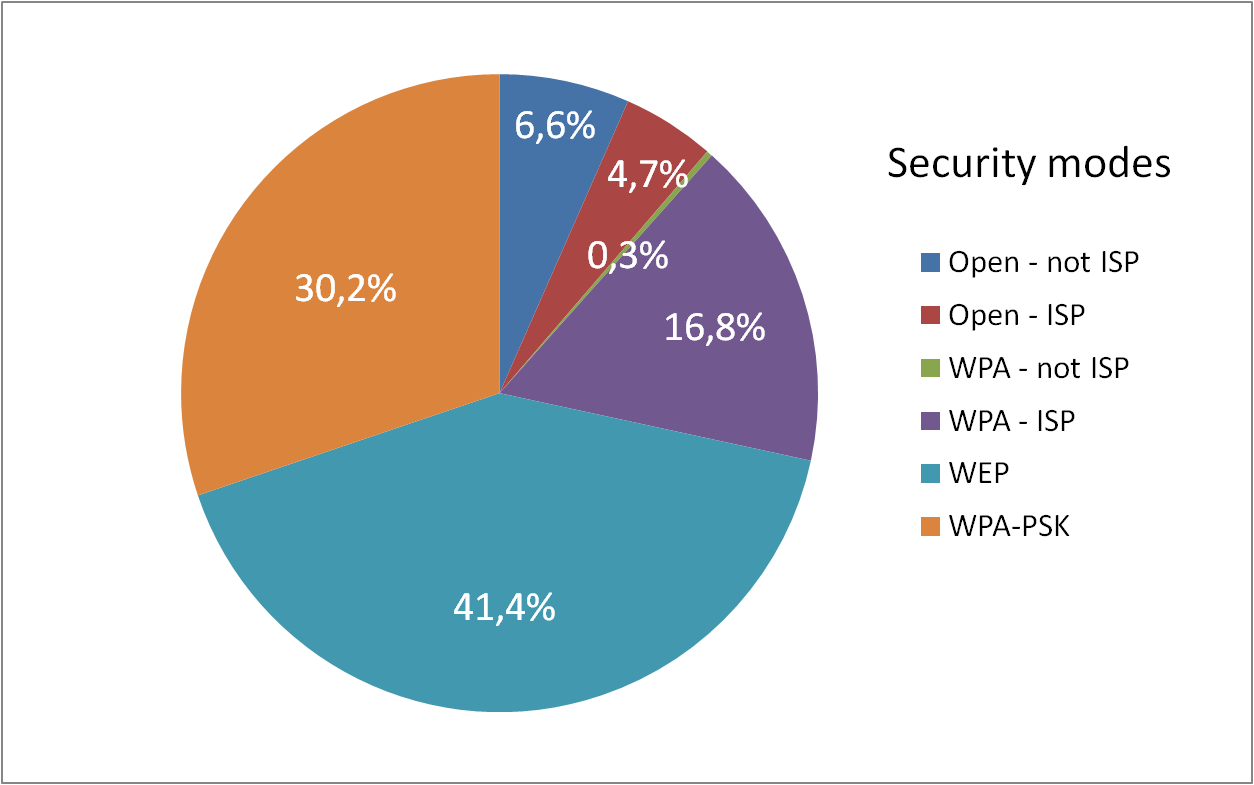
Security modes of Wi-Fi Access Points in Paris
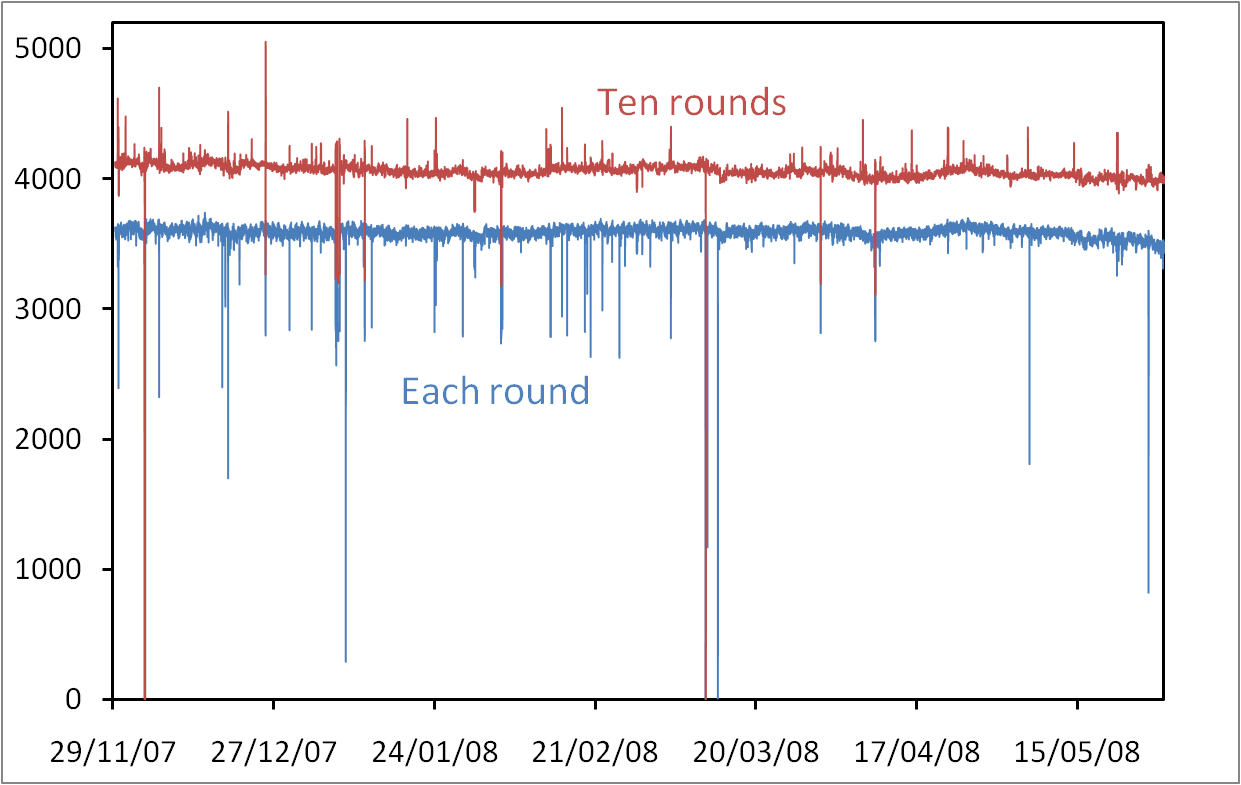
Reliability of observations of the internets topology
Time between queries in a P2P system
Dynamics of routes using traceroute
Main-memory Triangle Computations for Very Large (Sparse (Power-Law)) Graphs
Matthieu Latapy
Theoretical Computer Science (TCS) 407 (1-3), pages 458-473, 2008
Finding, counting and/or listing triangles (three vertices with three edges) in massive graphs are natural fundamental problems, which received recently much attention because of their importance in complex network analysis. We provide here a detailed survey of proposed main-memory solutions to these problems, in an unified way. We note that previous authors paid surprisingly little attention to space complexity of main-memory solutions, despite its both fundamental and practical interest. We therefore detail space complexities of known algorithms and discuss their implications. We also present new algorithms which are time optimal for triangle listing and beats previous algorithms concerning space needs. They have the additional advantage of performing better on power-law graphs, which we also detail. We finally show with an experimental study that these two algorithms perform very well in practice, allowing to handle cases which were previously out of reach.
Event detection around me
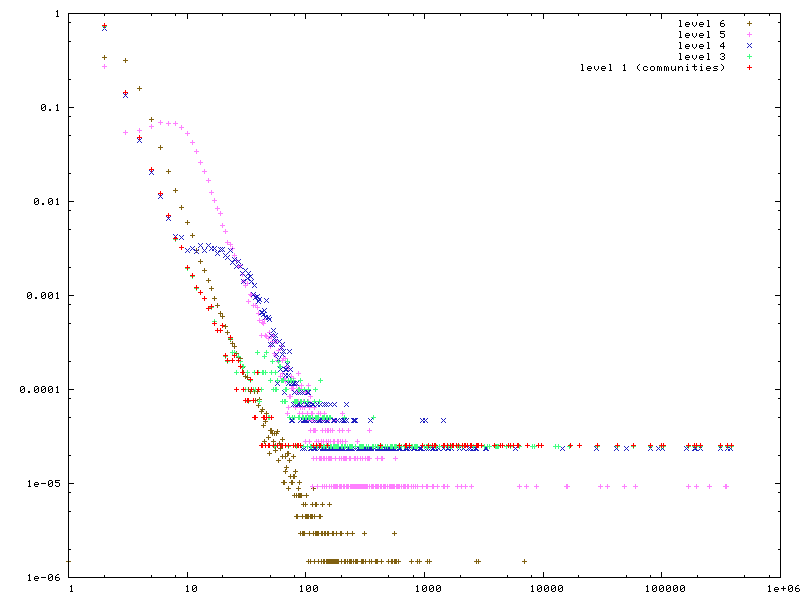
Size distribution of communities at different scales
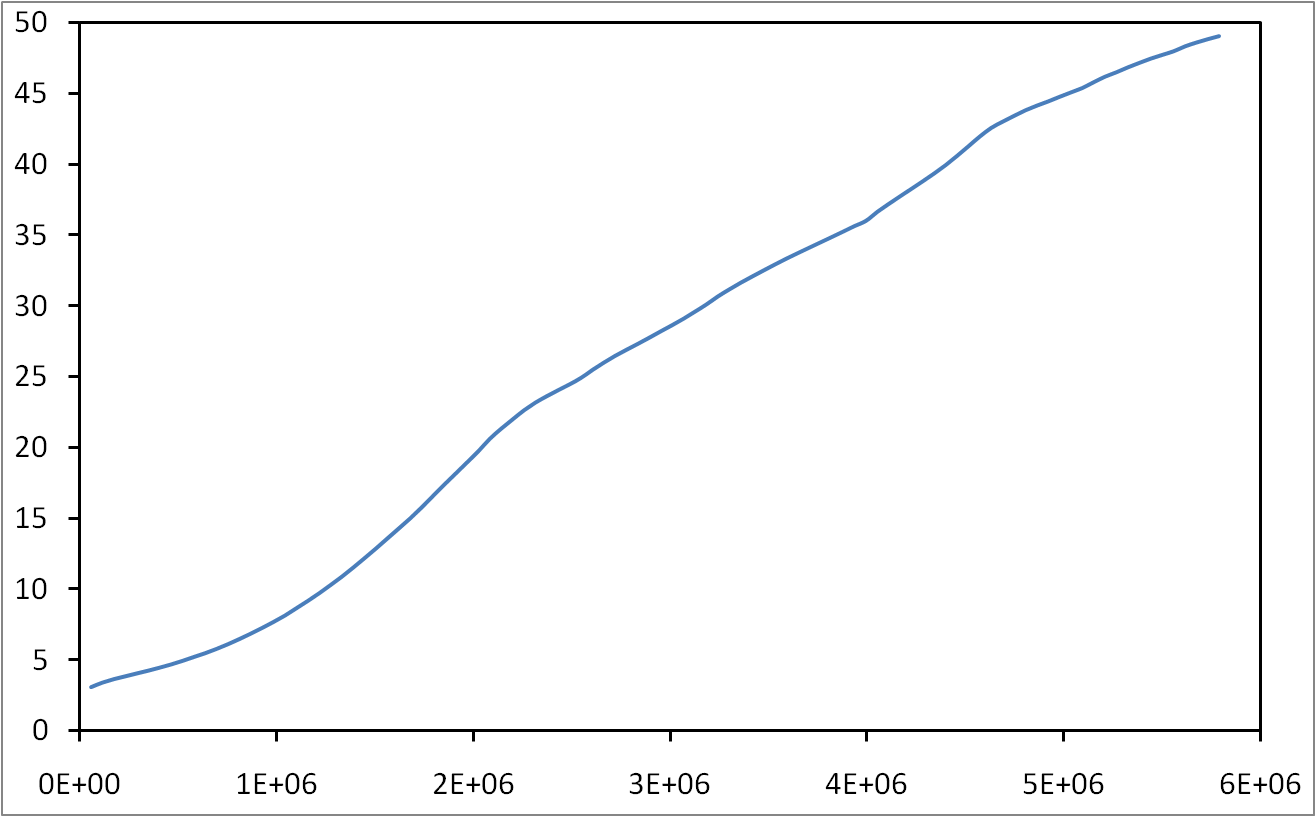
Download history of popular files
Daily Walks in Paris 13th: visualization of Wi-Fi access points
Dynamics of IP addresses around me
A Radar for the Internet
Matthieu Latapy, Clémence Magnien and Frédéric Ouédraogo
Proceedings of ADN’08: 1st International Workshop on Analysis of Dynamic Networks, in conjunction with IEEE ICDM 2008
In contrast with most internet topology measurement research, our concern here is not to obtain a map as complete and precise as possible of the whole internet. Instead, we claim that each machine’s view of this topology, which we call ego-centered view, is an object worth of study in itself. We design and implement an ego-centered measurement tool, and perform radar-like measurements consisting of repeated measurements of such views of the internet topology. We conduct long-term (several weeks) and high-speed (one round every few minutes) measurements of this kind from more than one hundred monitors, and we provide the obtained data. We also show that these data may be used to detect events in the dynamics of internet topology.